Comprehending Sand Spreading vs. Pass away Casting: Which Aluminum Foundry Approach Fits Your Job?
When contrasting sand casting and die casting for light weight aluminum tasks, a number of vital aspects come right into play. Each method has distinct characteristics that accommodate different production demands. Comprehending these distinctions can substantially influence job end results. As one considers elements like manufacturing volume and style intricacy, the decision ends up being increasingly nuanced. Which approach will ultimately line up ideal with certain job needs? The response may not be as straightforward as it seems.
Review of Sand Spreading
Sand casting is a commonly used metal casting process that utilizes sand as the key mold and mildew material. This approach is significant for its adaptability, enabling the manufacturing of complicated forms and large components. The process begins with producing a mold by condensing sand around a pattern, commonly constructed from steel or plastic. Once the mold and mildew is ready, liquified steel is put right into the dental caries and permitted to solidify. After cooling, the sand mold and mildew is escaped to disclose the final spreading.
One of the considerable advantages of sand casting is its cost-effectiveness, especially for low to medium production quantities. It accommodates a range of steels, including aluminum and iron, making it suitable for diverse applications. Furthermore, sand spreading can be adapted for numerous sizes and forms, enabling makers to meet details job requirements efficiently. This versatility makes it a preferred choice in industries such as automobile, aerospace, and building and construction.
Introduction of Pass Away Casting

Key Benefits of Sand Spreading
One of the primary benefits of sand casting depends on its flexibility and cost-effectiveness. This approach accommodates a wide variety of materials, including numerous aluminum alloys, enabling diverse applications in different sectors. The simpleness of the sand spreading procedure allows makers to generate complex shapes and dimensions without the need for costly machining, making it specifically useful for reduced to medium manufacturing volumes.
The use of sand as a mold product gives exceptional thermal buildings, helping with the casting of intricate designs with accuracy. The capacity to conveniently create new mold and mildews for different projects additionally enhances its flexibility. Additionally, sand spreading calls for very little ahead of time financial investment in tooling contrasted to other casting techniques, making it easily accessible for smaller sized business. These advantages collectively position sand spreading as a recommended choice for numerous manufacturers seeking adaptability and financial performance in their production procedures.
Trick Benefits of Pass Away Casting
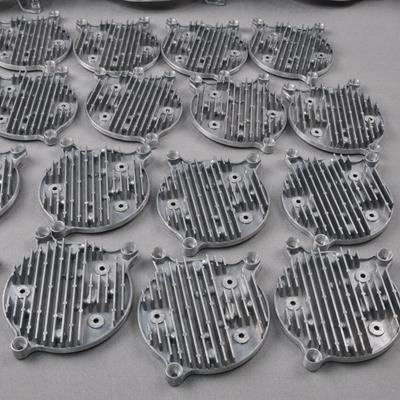
When contrasting spreading techniques, pass away casting offers distinct advantages that deal with high-volume manufacturing demands and accurate design requirements. This approach enables the production of complex geometries with tight tolerances, which is essential for industries calling for exact specs, such as vehicle and aerospace (aluminum casting). Pass away casting also causes remarkable surface finishes, lowering the requirement for considerable post-processing
The procedure is extremely effective; molten steel is injected right into mold and mildews at high stress, enabling for rapid cycle times and boosted manufacturing rates. This performance equates right into expense savings, making pass away casting a cost-effective selection for large manufacturing. Additionally, the sturdiness of elements created with die spreading guarantees their long life and reliability in numerous applications. Ultimately, these benefits position die casting as a leading option for tasks concentrating on high quality, efficiency, and precision in high-volume manufacturing scenarios.
Selecting the Right Approach for Your Task
Exactly how can a project manager identify the most appropriate casting method for their details demands? The choice in between sand casting and pass away casting rest on several essential elements. The task supervisor should analyze the necessary volume of parts; pass away casting is extra effective for high-volume production, while sand spreading fits low to modest quantities. Next, they need to think about the complexity of the style. Complex geometries usually favor pass away casting due to its precision capabilities, whereas sand spreading permits greater flexibility in design adjustments.
Material properties additionally play an essential function, as die casting generally creates more powerful components with exceptional surface coatings. Price implications, consisting of tooling and product costs, must be evaluated; sand spreading usually offers lower initial costs but can be much less efficient in automation. Ultimately, the task manager should weigh these factors versus task timelines, spending plan restraints, and top quality requirements to choose the ideal method that aligns with the project's goals.
Frequently Asked Concerns
What Kinds Of Aluminum Alloys Appropriate for Sand and Die Casting?
Numerous aluminum alloys appropriate for sand and die casting, consisting of 356, 319, and 413 alloys. These options are favored for their superb castability, mechanical buildings, and he said suitability for diverse applications in manufacturing.
How Do Manufacturing Expenses Contrast Between Sand Spreading and Pass Away Casting?
Manufacturing prices for sand casting are generally reduced due to less complex materials and arrangements. In comparison, die spreading entails higher initial expenses from tooling yet provides price financial savings through mass manufacturing, making it more economical at larger ranges.
Can Both Techniques Create Complex Geometries?
What Is the Regular Preparation for each and every Casting Technique?
Commonly, sand casting preparation range from one to three weeks, influenced by complexity and volume. On the other hand, die casting check that usually uses quicker manufacturing, with preparations frequently between one to two weeks, relying on design specs.
Just How Do Ecological Factors Affect Casting Quality?
Environmental elements, consisting of humidity, temperature level, and dust levels, significantly impact casting quality. Variants can bring about flaws such as porosity or surface area imperfections, inevitably impacting the mechanical buildings and efficiency of the last cast product.
When comparing sand spreading and die casting for aluminum jobs, a number of critical aspects come into play (aluminum casting). Sand spreading is a widely utilized steel casting process that employs sand as the main mold material. Die spreading is an additional prominent steel casting process that offers distinct advantages compared to sand spreading. The task supervisor check my source must assess the required quantity of parts; die spreading is much more efficient for high-volume production, while sand casting fits reduced to moderate amounts. Both sand spreading and pass away casting can produce complicated geometries, though they accomplish this in different methods